Rehearsal studio acoustic treatment — Tallinn
Multi-band porous absorption for a band rehearsal room — built collaboratively with the band that uses it. A purpose-built rehearsal room treated to reduce reverberation, control first reflections, and make the space usable for both rehearsal and informal recording.
Carpentry, painting, and panel construction were all done by the band over a few weekends; I specified the treatment, sourced materials, and led the design. The case study documents that whole path — from bare office room to working studio — rather than the acoustic specification on its own.
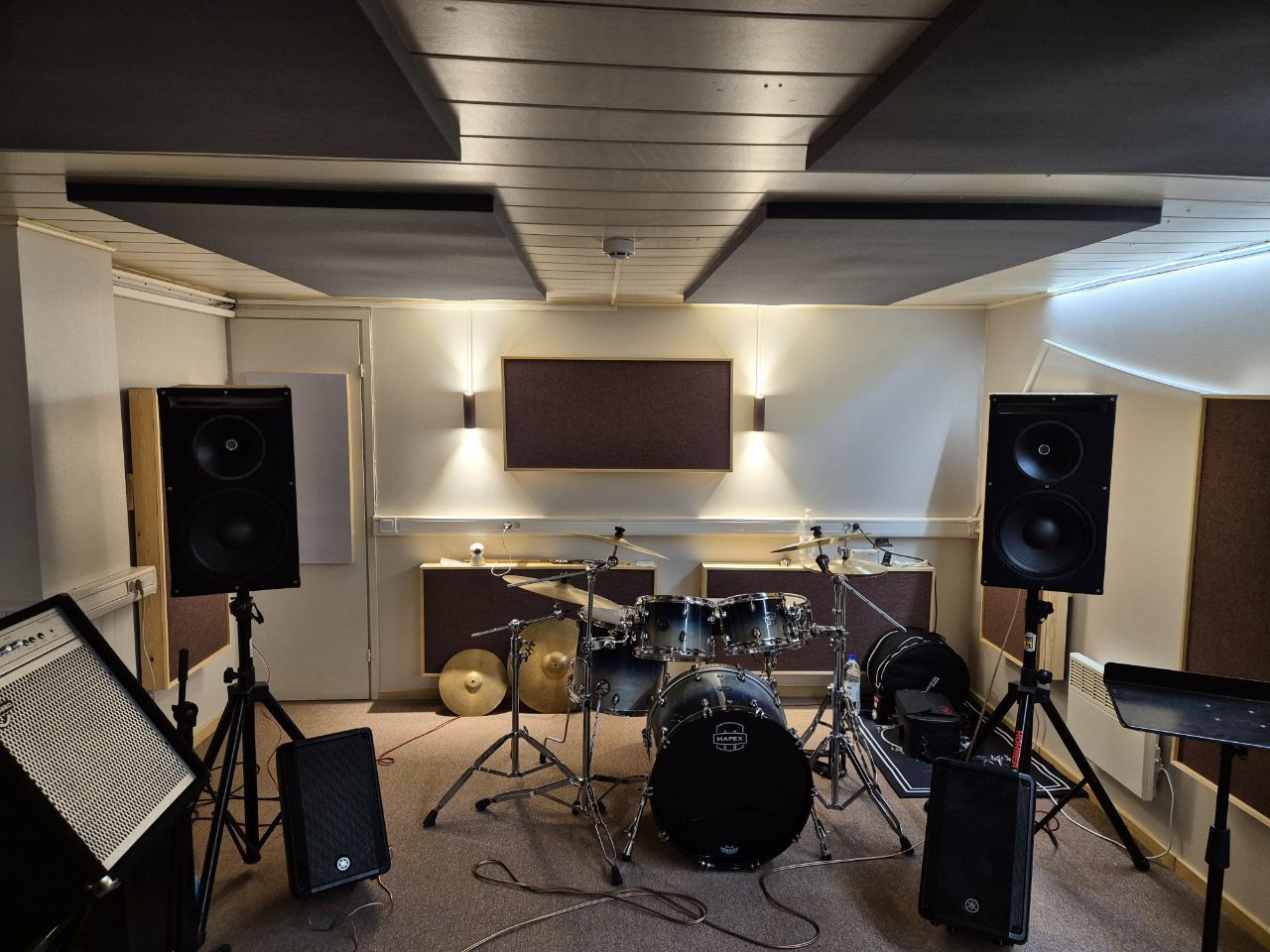
What was here
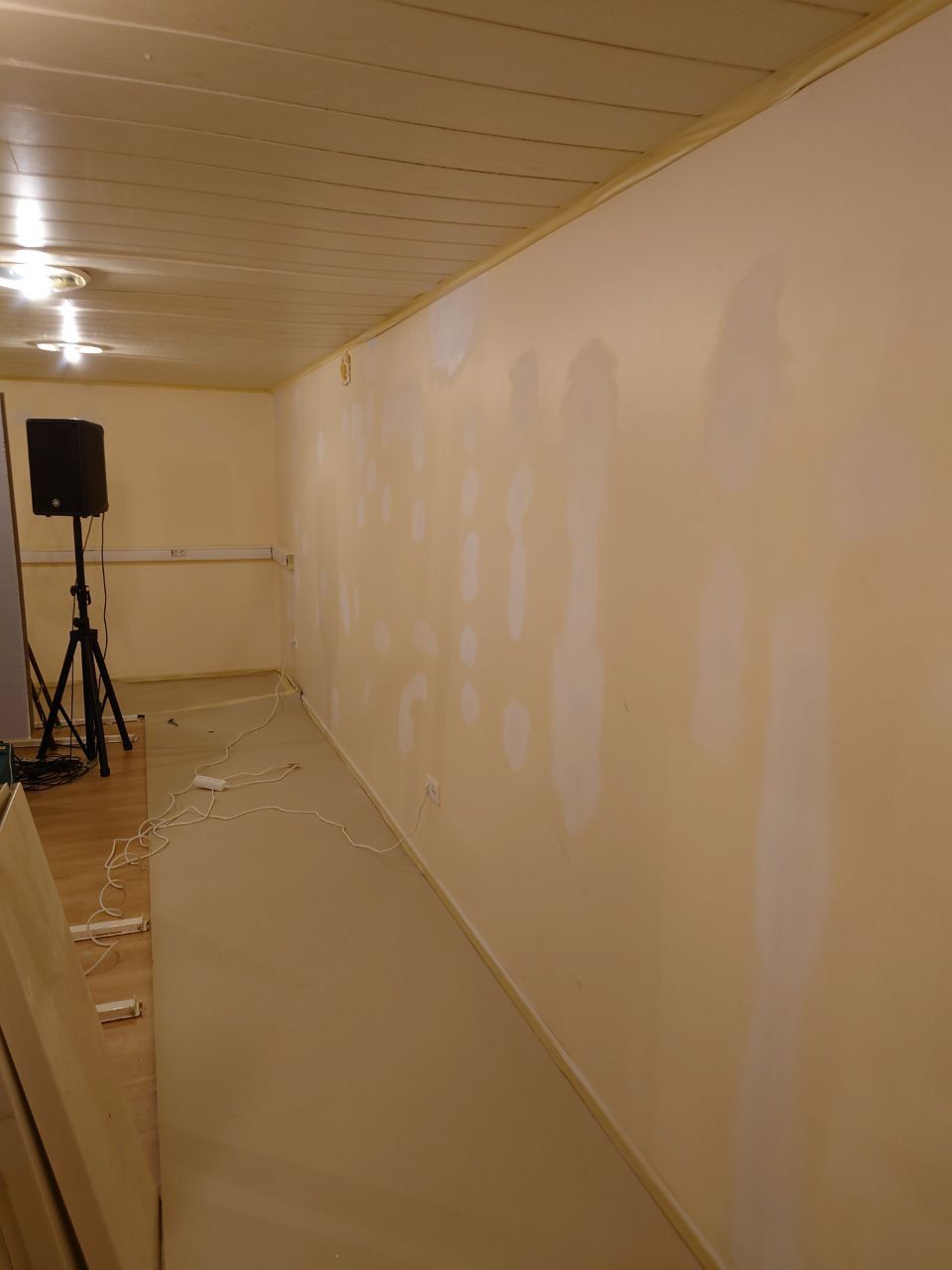
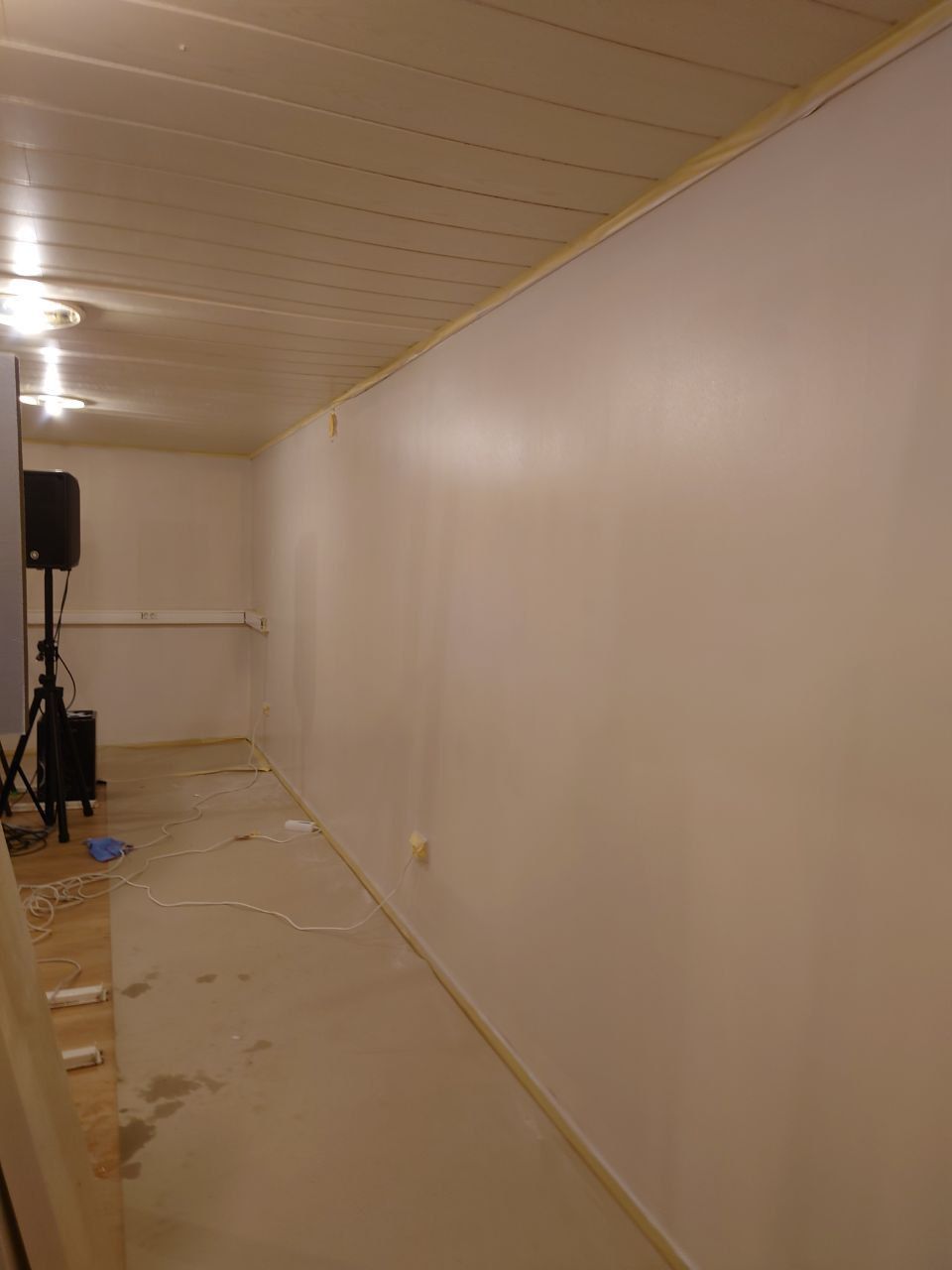
A standard timber-clad office room. 19 mm boards on walls and ceiling, a single PA already in place from earlier rehearsal use, and the acoustic problems you'd expect from a long parallel-wall space with no treatment: heavy modal pile-up in the bottom octaves, slap echo across the long axis, and a ringing high-mid character from the bare timber surfaces.
Carpentry, painting, and the floor were already finished by the time the acoustic work started. The case study from this point on is what came next: choosing absorbers, designing the wall and ceiling panels, building them with the band, and placing them by reflection geometry.
Approach
Three porous-absorber strategies, each chosen to do a different job in a different frequency band.
Wall absorbers — wood-fibre cores. HUNTON NATIVO panels faced with Camira CARA acoustic fabric in custom wood frames. Wood fibre is a high-density porous absorber that performs well into the lower mid-range — useful in a room that contains both drums and amplified instruments.
Ceiling — broadband adhesive foam. 100 × 200 × 4 cm anthracite-coloured panels — a thinner, broadband absorber appropriate for the smaller air gap above the listener.
Targeted Basotect. 100 × 50 × 5 cm light-grey adhesive panels at specific reflection points — lower density per area than the wall panels, but with very high absorption coefficient per thickness for the budget.
Absorber types were chosen for their absorption profile, not their appearance, and placed by reflection geometry rather than by what would look symmetric.
Materials & panels
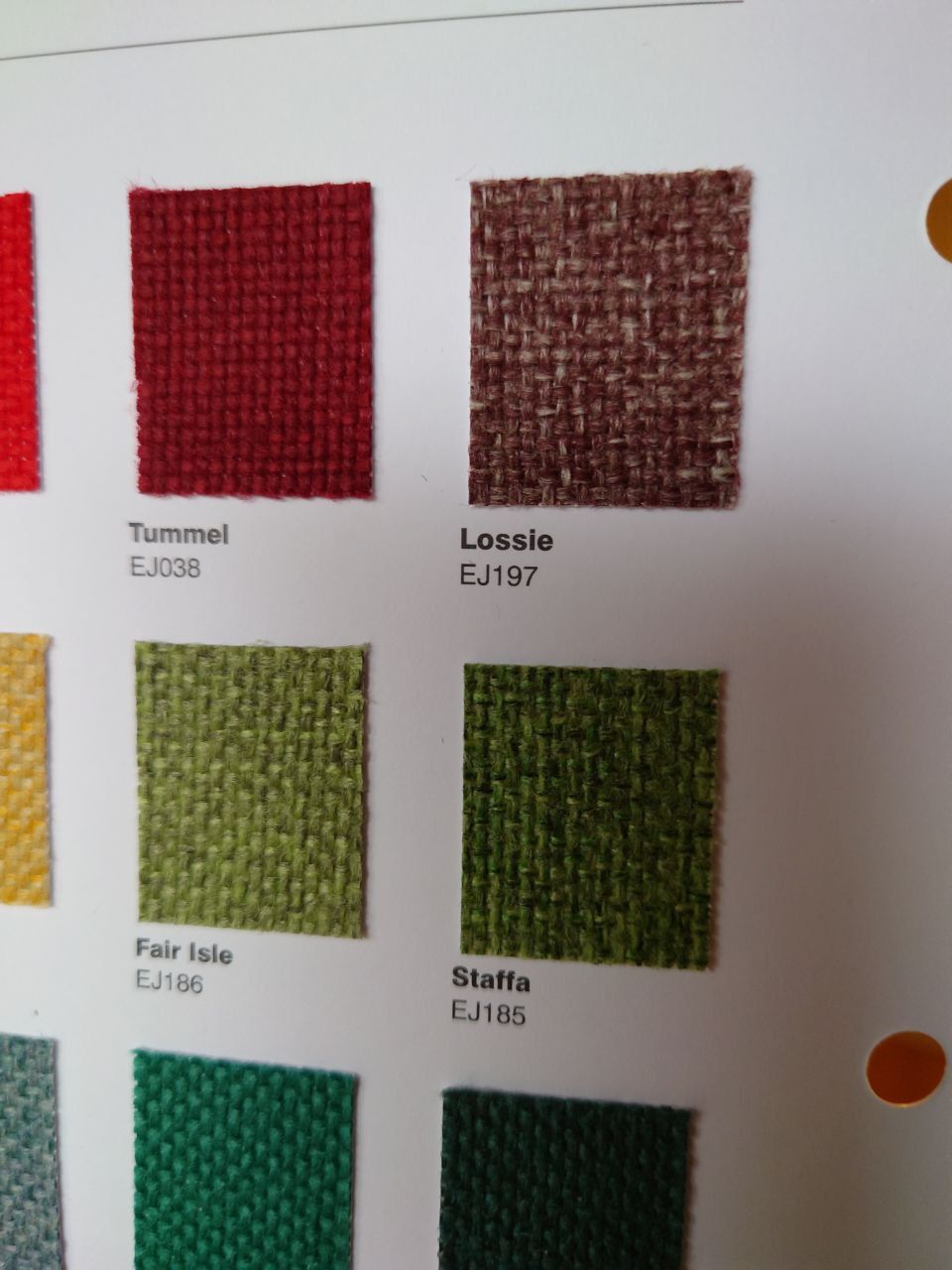
Fabric. Camira CARA was the chosen line — high open-area weave (so it's acoustically transparent for the porous core behind it), a colour range that worked with the room, and durability for a working rehearsal space that gets cables dragged across it twice a week.
Panel design. Each wall absorber is a 122 × 56.5 × 10 cm wood-framed module: HUNTON NATIVO wood-fibre core stretched with Camira fabric, then hung on a cleat-and-bracket system that lets us reposition the panels as the room's use evolves.
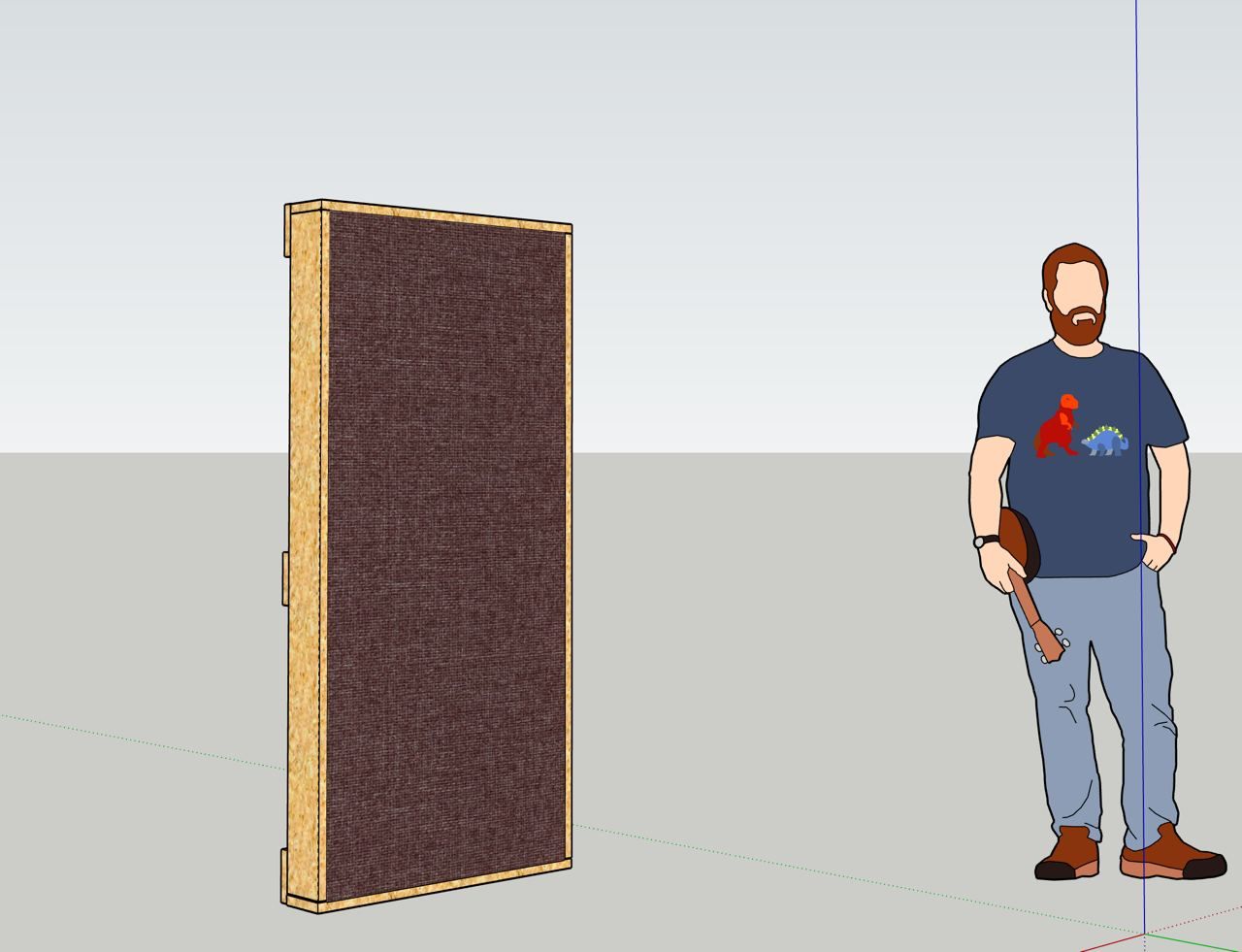
- Wall absorbers
- 9 × custom-built panels — HUNTON NATIVO wood-fibre cores (122 × 56.5 × 10 cm), Camira CARA fabric, custom wooden frames with metal-angle bracing
- Ceiling
- 6 × 100 × 200 × 4 cm acoustic foam (anthracite, adhesive)
- Targeted Basotect
- 100 × 50 × 5 cm light-grey adhesive panels at specific reflection points
- Vibration control
- Anti-vibration matting at speaker stand contact points
The studio today
The room reads quiet. Slap echo gone, bass more controlled, high-mid ring tamed.
It serves both rehearsal and informal recording, and the absorbers come down for repositioning when the room's use shifts — which has already happened twice as the band's playing has changed.
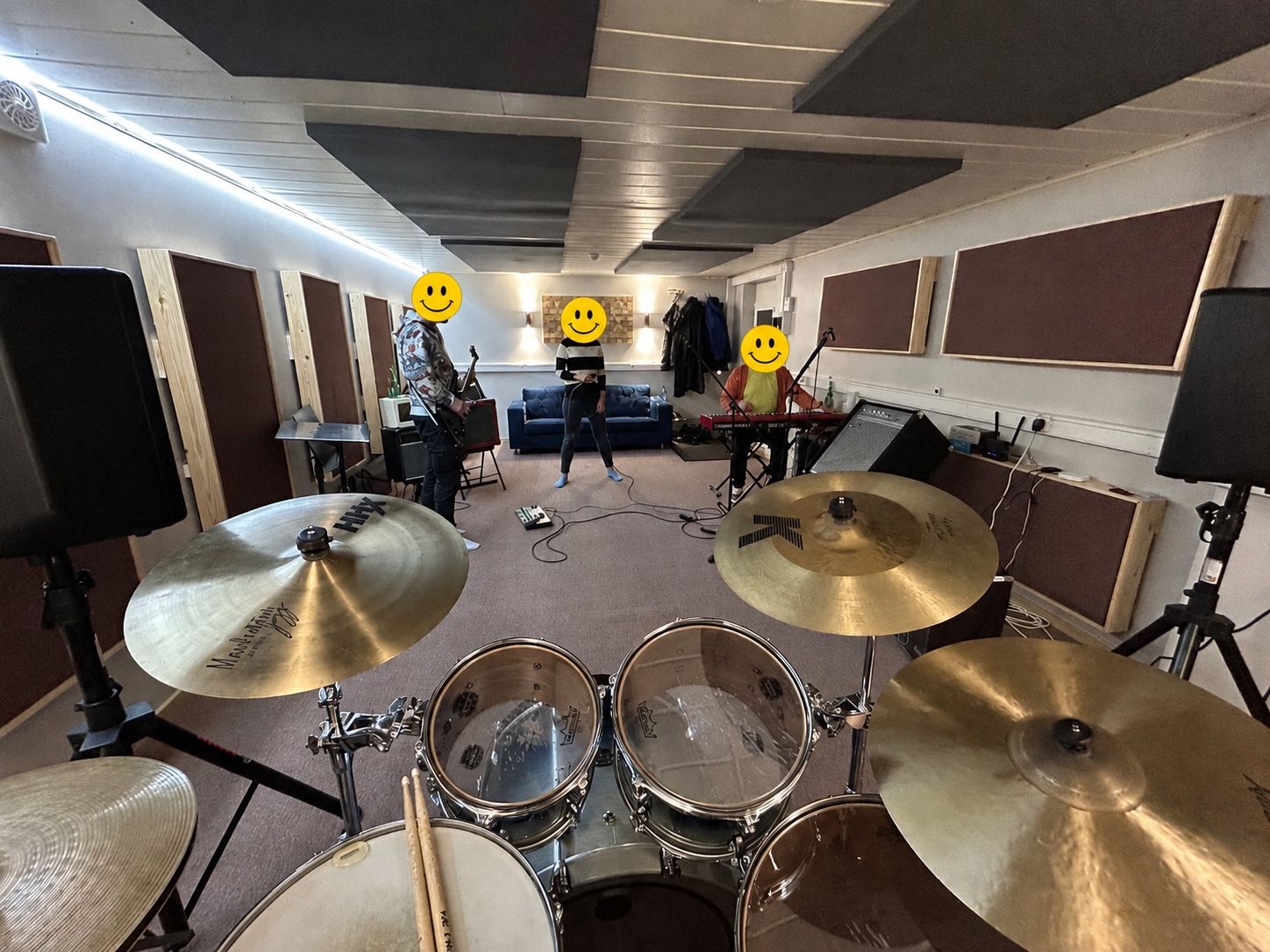
What this case study deliberately doesn't have is a measurement set. Pre- and post-treatment REW captures were taken but never re-collated for publication — and at this point the room is being used rather than re-measured. The next time a UMIK goes back in, it'll be for the bass-trap revision rather than the archived comparison.
What I'd do differently
- /R01 Pre-build measurement pass — even if the data doesn't ship in the case study, capturing a baseline RT60 / waterfall before treatment would have informed absorber placement more rigorously than reflection geometry alone.
- /R02 Bass trapping at room corners. This build was deliberately lighter on low-frequency control than ideal; pressure-zone corner traps are the obvious next step.
- /R03 A few diffusers behind the playing position. Current treatment is absorption-heavy — the room is on the edge of going 'too dead' at higher frequencies for the kind of energetic playing it's used for.
- /R04 Better-documented mounting positions. The cleat-and-bracket system supports repositioning, but the layout lives mostly in my head and on tape marks on the walls.
Status
Treatment completed and in active use.
Built collaboratively over a few weekends, in use ever since. Three threads continue from this build: